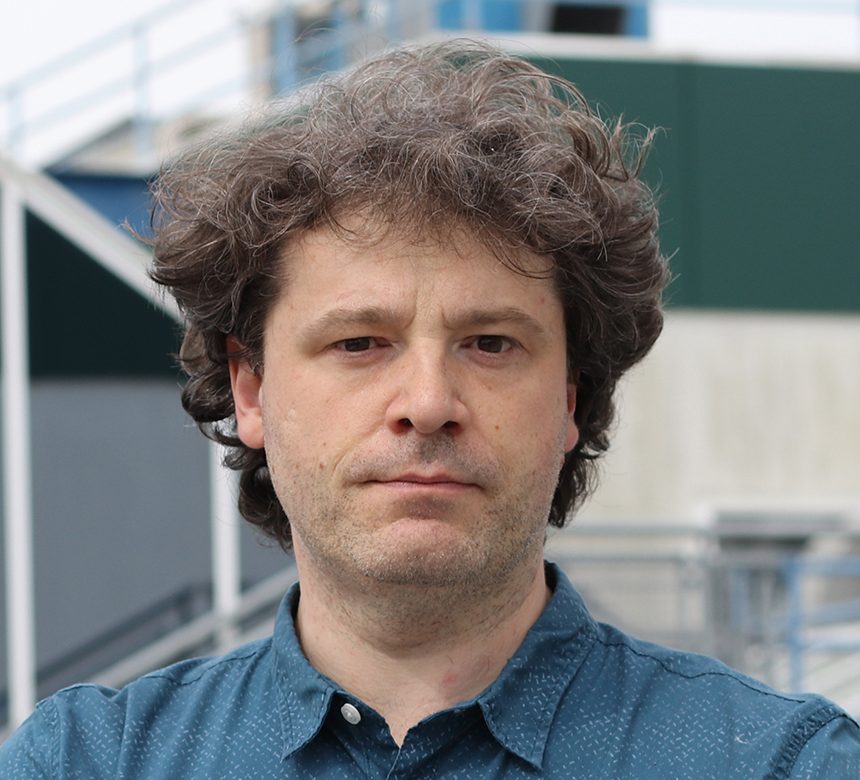
Federico Forneris – Professor of Molecular Biology







Email: federico.forneris@unipv.it
Personal details
- Born 7 August 1978 in Piedmont, Italy — Guarene, my beautiful hometown
- Languages: Italian, English and French
Current position(s)
- 2023–present: Full Professor (tenured), University of Pavia, Italy
- 2025–present: President of the Centro Grandi Strumenti, University of Pavia, Italy
- 2022–present: President of the INF-ACT Foundation, Pavia, Italy
Previous positions
- 2021–2025: Vice-Rector for Research, University of Pavia, Italy
- 2017–2023: Associate Professor (tenured), University of Pavia, Italy
- 2014–2017: Assistant Professor (tenure-track), University of Pavia, Italy
- 2009–2013: Postdoctoral research assistant, Utrecht University, The Netherlands
- 2007–2009: Postdoctoral research assistant, University of Pavia, Italy
Honors
Education and training
- 2009–2013: Postdoctoral research in Protein Structural Biology, Crystal and Structural Chemistry, Bijvoet Centre for Biomolecular Research, Utrecht University, The Netherlands
- 2003–2008: PhD research in Basic and Applied Biomolecular Sciences, Institute for Superior Studies (IUSS) and University of Pavia, Italy. Thesis: Investigating the Structural and Biochemical Properties of human Lysine-Specific Demethylase LSD1.
- 1997–2002: Master degree in Physical Chemistry, cum laude with special mention and recommendation for publication, University of Turin, Italy. Thesis: Crystallographic studies of Artificial Metalloproteins with four-helical bundle motifs.
- 1992–1997: High school diploma in Accountancy, Istituto Tecnico Commerciale E. Tesauro, Fossano, Italy
Research summary
The common theme of the active research projects of my lab is the elucidation of the intricate mechanisms of extracellular protein-protein interaction and signaling. The various processes that fall under the description of “molecular recognition” (ranging from transient inter-molecular interactions, conformational changes, proteolysis-mediated activation and inhibition, to many others) represent for me one of the most fascinating aspects of nature elegance and complexity. In my research lab, we merge structural biology with biochemistry and biophysics to characterize large macromolecular complexes and elucidate their structure-function relationship to put the molecular insights in the proper biological context. For more information about current research and targets, please visit the Research section of our lab website.
I am co-author of several publications in international peer-reviewed scientific journals of high profile including Science, PNAS, Nature Communications, Science Advances, Science Signaling, Cell Reports, Current Biology J. Neurosci, EMBO J and JACS and 3 book chapters (Complete publications list in Pubmed).
PREVIOUS RESEARCH EXPERIENCES
During my PhD in the lab of Prof. Andrea Mattevi, I have applied enzymology, biophysics and structural biology to study several flavin-containing enzymes and explore their catalytic properties. The main result of these efforts was the detailed characterization of the structural and biochemical features of the first ever discovered human histone demethylase LSD1 ad its complexes. Being able to express and purifiy recombinant LSD1 and its complex with the co-repressor CoREST, I have explored LSD1 substrate recognition mechanism, and enphasized the role of LSD1 as a potential drug target and provided the bases for a large number of investigations involving this enzyme complex and its multiple functions.
During my postdoc in Utrecht, I worked as NIH/ERC funded postdoctoral fellow on a collaborative project coordinated by Prof. Piet Gros and Prof. John Lambris on the structural characterization of macromolecular complexes of the complement system (for a general overview about the structural biology of the complement system, see this page). I combined low-resolution x-ray crystallography of large macromolecular complexes, biochemistry and biophysics to characterize multiple intermediate steps of the complement cascade.
I also contributed to the characterization of the complex between the stem cell signaling molecule R-spondin 1, its receptor LGR5 and its antagonist ZNRF3. LGRs are receptors for R-spondins, potent Wnt agonists that exert profound trophic effects on Wnt-driven stem cells compartments. Using a combination of structural and cellular biology analyses, our data revealed binding of R-spondins to conserved sites on LGRs and suggested a direct signalling role for LGRs in addition to forming Wnt receptors/co-receptors complexes.
SELECTED PUBLICATIONS:
- De Marco, M., Rai, S.R., Scietti, L., Mattoteia, D., Liberi, S., Moroni, E., Pinnola, A., Vetrano, A., Iacobucci, C., Santambrogio, C., Colombo, G., Forneris, F. (2025) Molecular Structure and Enzymatic Mechanism of the Human Collagen Hydroxylysine Galactosyltransferase GLT25D1/COLGALT1, Nature Communications, 16, 3624.
- Patil, D.N.*, Pantalone, S., Cao, Y., Laboute, T., Novick, S.J., Singh, S., Savino, S., Faravelli, S., Magnani, F., Griffin, P.R., Singh, A.K., Forneris, F.*, Martemyanov, K.A.* (2023) Structure of the photoreceptor synaptic assembly of the extracellular matrix protein pikachurin with the orphan receptor GPR179, Science Signaling, 16, eadd9539. *Corresponding Authors
- Arnoldi I., Mancini G., Fumagalli M., Gastaldi D., D’Andrea L., Bandi C., Di Venere M., Iadarola P., Forneris F.*, Gabrieli P.* (2022) A salivary factor binds a cuticular protein and modulates biting by inducing morphological changes in the mosquito labrum, Current Biology, 32, 3493-3504.e11. *Corresponding Authors
- Scietti, L., Chiapparino, A., De Giorgi, F., Fumagalli, M., Khoriauli, L., Nergadze, S., Basu, S., Olieric, V., Cucca, L., Banushi, B., Profumo, A., Giulotto, E., Gissen, P., Forneris, F. (2018) Molecular architecture of the multifunctional collagen lysyl hydroxylase and glycosyltransferase LH3, Nature Communications, 9, 3163.
- Banushi, B., Forneris, F.*, Straatman-Iwanowska, A., Strange, A., Lyne, A., Rogerson, C., Burden, J.J., Heywood, W.E., Hanley, J., Doykov, I., Straatman, K.R., Smith, H., Bem, D., Kriston-Vizi, J., Ariceta, G., Risteli, M., Wang, C., Ardill, R.E., Zaniew, M., Latka-Grot, J., Waddington, S.N., Howe, S.J., Ferraro, F., Gjinovci, A., Lawrence, S., Marsh, M., Girolami, M., Bozec, L., Mills, K., Gissen, P.* (2016) Regulation of post-Golgi LH3 trafficking is essential for collagen homeostasis, Nature Communications, 7, 12111. *Corresponding Authors
- Forneris, F., Wu, J., Xue X., Ricklin, D., Lin, Z., Sfyroera, G., Tzekou, A., Volokhina, E., Granneman, J.C.M., Hauhart, R., Bertram, P., Liszewski, M.K., Atkinson, J.P., Lambris, J.D., Gros, P. (2016) Regulators of complement activity mediate inhibitory mechanisms through a common C3b-binding mode, The EMBO Journal, 35, 1133-1149.
- Forneris, F., Ricklin, D., Wu, J., Tzekou, A., Wallace, R.S., Lambris, J.D., Gros, P. (2010) Structures of C3b in complex with factors B and D give insight into complement convertase formation. Science, 330, 1816-1820.
- Forneris, F., Mattevi, A. (2008) Enzymes without borders: Mobilizing substrates, Delivering products. Science, 321, 213-216.